

Top Industries Benefiting from CNC Machining Centers
Computer Numerical Control (CNC) machining centers have become the backbone of modern manufacturing, enabling unprecedented precision, efficiency, and scalability. By automating the control of machine tools via computer programming, CNC technology has transformed production processes across a diverse range of sectors. From crafting intricate aerospace components to producing life-saving medical implants, the impact of CNC machining is profound and far-reaching. This article explores the key industries that rely most heavily on advanced CNC machining centers, highlighting how this technology drives innovation, ensures quality, and meets the demanding specifications of today's global markets.
1. Aerospace and Defense Industry
The aerospace and defense sector is arguably the most demanding beneficiary of CNC machining. Components for aircraft, spacecraft, and military systems must adhere to extreme standards of precision, durability, and reliability. CNC machining centers excel at producing complex geometries from high-strength, often difficult-to-machine materials like titanium, Inconel, and advanced composites.
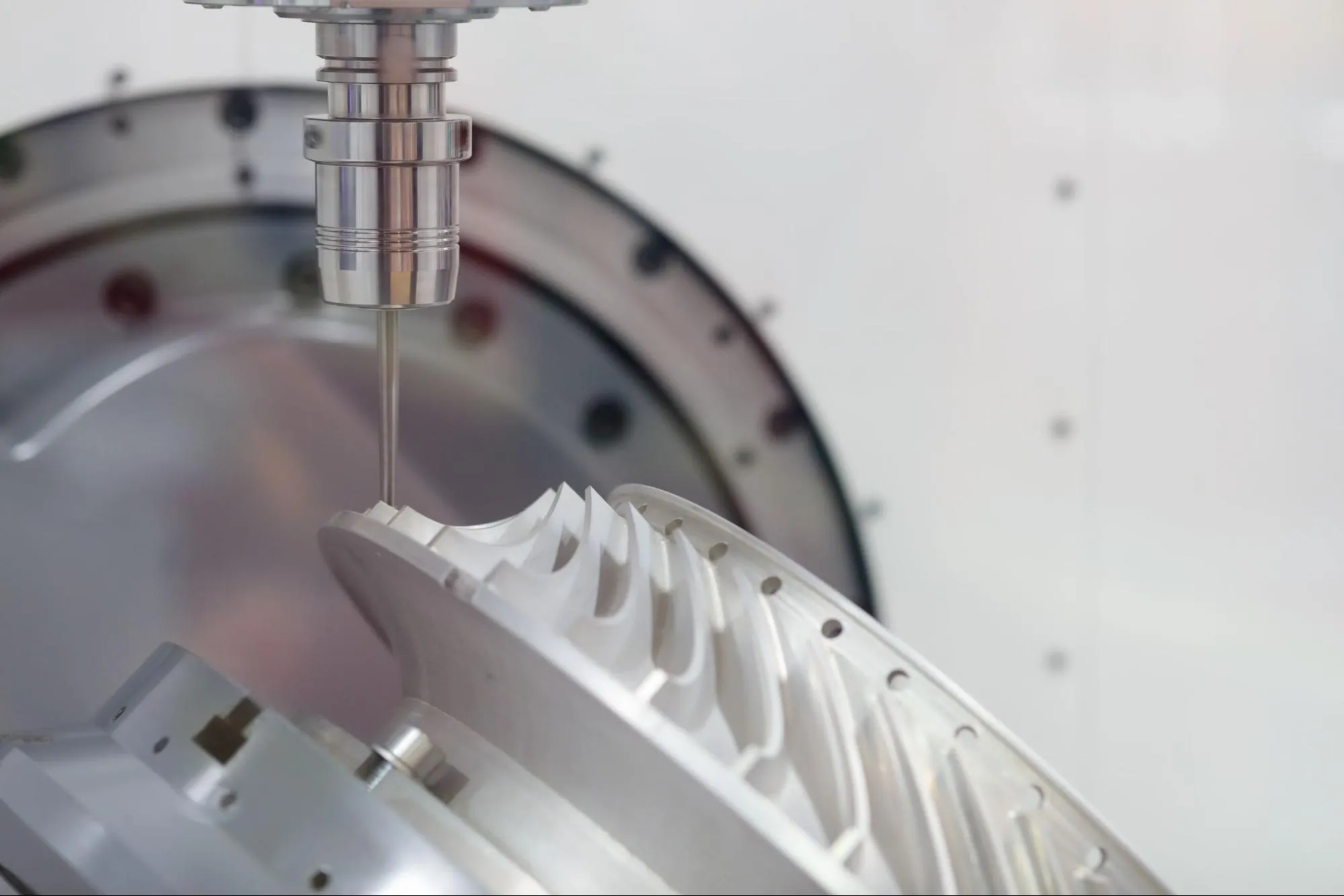
Aerospace turbine blade being machined on a 5-axis CNC center.
Applications include engine components (turbine blades, housings), structural airframe parts, landing gear assemblies, and intricate guidance system parts. The ability of multi-axis CNC centers to perform complex milling, turning, and drilling operations in a single setup is critical for maintaining the tight tolerances and perfect surface finishes required for flight safety.
Key Contributions in Aerospace:
- Precision and Repeatability: Ensures every part meets exact design specifications, crucial for safety-critical components.
- Material Versatility: Capable of handling exotic alloys that are essential for high-performance applications.
- Complex Part Production: 5-axis machining allows for the creation of monolithic, lightweight structures that replace multiple assembled parts.
2. Medical and Healthcare Industry
CNC machining is vital in the medical field, where customization, biocompatibility, and sterile precision are non-negotiable. The technology is used to manufacture a wide array of devices, from standard surgical instruments to custom patient-specific implants.
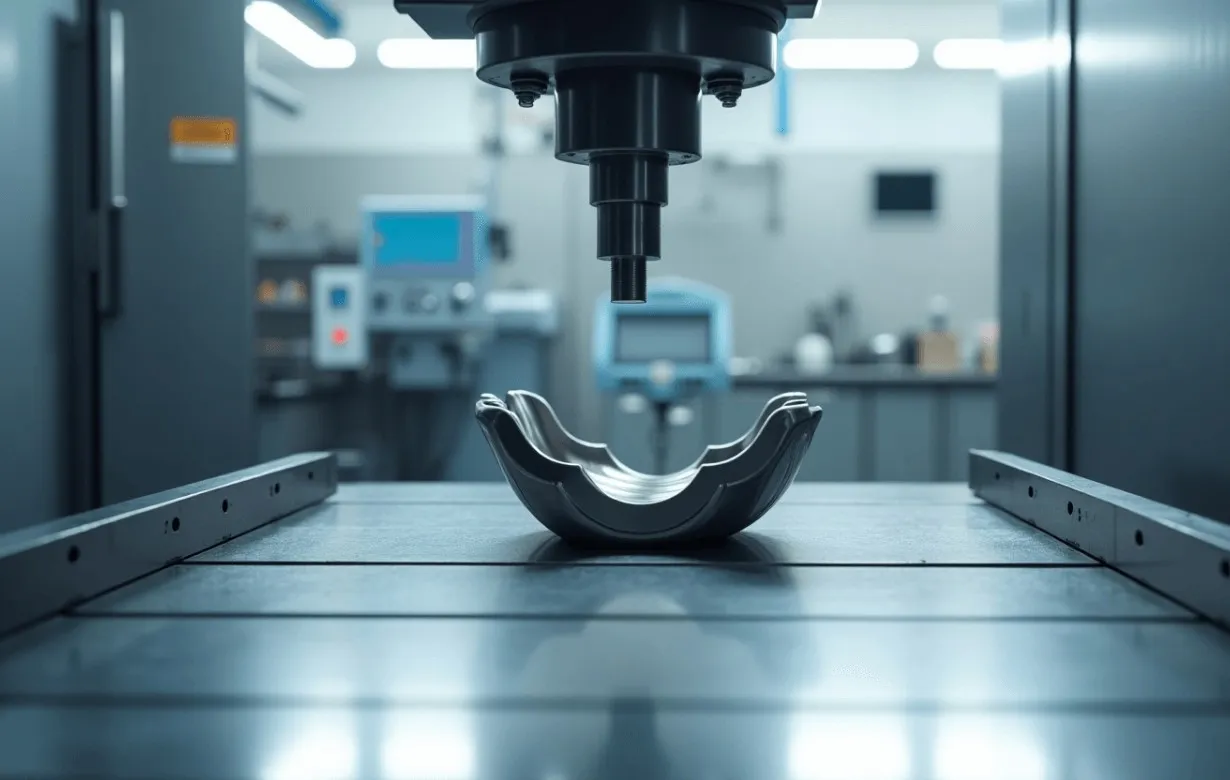
CNC machining of a titanium orthopedic knee implant.
Common medical CNC products include orthopedic implants (knees, hips, spinal cages), surgical tools, dental components (crowns, bridges, abutments), and enclosures for diagnostic equipment. The process ensures exceptional surface quality and the ability to work with medical-grade materials like stainless steel, titanium, cobalt-chrome, and PEEK plastic without contamination.
| Medical Device Type | Common Materials | CNC Process | Critical Requirement |
|---|---|---|---|
| Orthopedic Implants | Ti-6Al-4V, Cobalt-Chrome | 5-Axis Milling | Biocompatibility & Bone Integration |
| Surgical Instruments | Stainless Steel 316L | Precision Milling/Turning | Sterilizability & Sharpness |
| Diagnostic Equipment Housings | Aluminum, Engineering Plastics | 3-Axis Machining | EMI Shielding & Precision Fit |
| Dental Components | Zirconia, Titanium | High-Speed Milling | Aesthetic Finish & Dimensional Accuracy |
3. Automotive Industry
From prototyping to mass production, the automotive industry leverages CNC machining for both performance and efficiency. It is instrumental in developing engine blocks, transmission components, suspension parts, and intricate elements for electric vehicle (EV) battery systems and powertrains.
The shift towards electric vehicles has further increased demand. CNC centers produce precise motor housings, heat sinks, and power electronics components. The technology supports rapid prototyping for new designs and creates durable tooling, molds, and dies for casting and injection molding processes used in high-volume manufacturing.
4. Electronics and Semiconductor Industry
The relentless miniaturization and complexity of electronic devices require manufacturing capabilities at microscopic levels of precision. CNC machining centers produce the essential infrastructure for electronics manufacturing.
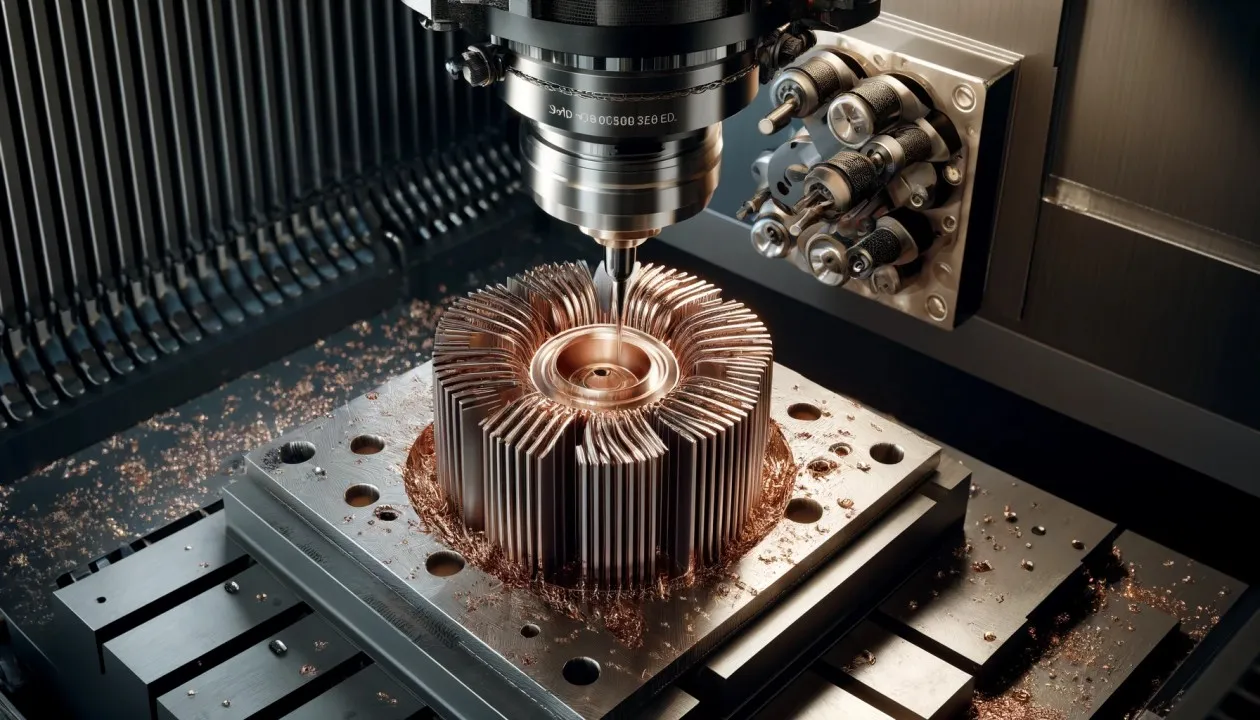
A CNC machine crafting a precise heat sink for computer electronics.
Key applications include:
- Heat Sinks: Complex aluminum or copper components for thermal management in CPUs, GPUs, and LEDs.
- Enclosures and Housings: Precise frames for servers, connectors, and mobile devices that require EMI/RFI shielding.
- Semiconductor Fabrication Equipment: Wafer handling robots, chamber parts, and lithography components that must be ultra-flat and clean.
5. Energy Sector (Oil & Gas, Renewable)
Both traditional and renewable energy industries depend on robust, precision-machined parts. In oil and gas, CNC machining produces valves, pistons, drill bits, and wellhead components that withstand high pressure, corrosive environments, and extreme temperatures.
In renewable energy, CNC technology fabricates critical components for wind turbines (gearbox parts, hubs), solar panel frames, and hydroelectric turbine blades. The ability to machine large, durable parts with consistent quality is essential for the efficiency and longevity of energy systems.
6. Mold and Die Making
This industry is fundamental to mass production across all sectors. CNC machining centers are used to create the precise molds and dies for injection molding, die casting, stamping, and forging. The quality of the mold directly determines the quality, detail, and production speed of the final plastic, metal, or composite parts.
High-speed CNC machining and sinker EDM (Electrical Discharge Machining) processes create molds with complex contours, fine textures, and tight tolerances, enabling the production of everything from automotive bumpers and consumer electronics casings to medical device housings.
Comparative Industry Reliance on CNC Machining
| Industry | Primary CNC Benefit | Typical Tolerance Requirements | Material Examples |
|---|---|---|---|
| Aerospace | Ultra-Precision & Complex Geometry | ± 0.0001" (0.0025 mm) | Titanium, Inconel, Composites |
| Medical | Biocompatible Precision & Customization | ± 0.0005" (0.0127 mm) | Medical Stainless, Titanium, PEEK |
| Automotive | High-Volume Repeatability & Durability | ± 0.001" (0.025 mm) | Aluminum, Steel Alloys, Cast Iron |
| Electronics | Miniaturization & Thermal Management | ± 0.0002" (0.005 mm) | Aluminum, Copper, Engineering Plastics |
| Energy | Robustness for Extreme Environments | ± 0.002" (0.05 mm) | High-Strength Steel, Corrosion-Resistant Alloys |
Conclusion
CNC machining centers are not just machine tools; they are enabling technologies that propel entire industries forward. Their unique combination of digital precision, material flexibility, and automated efficiency makes them indispensable in sectors where quality, complexity, and reliability are paramount. As technology advances with innovations like additive manufacturing integration, AI-driven optimization, and IoT connectivity, the role of CNC machining will continue to expand, solidifying its position at the core of advanced manufacturing for years to come.