

The Role of Robotics in Pharmaceutical Packaging
The pharmaceutical industry operates under stringent regulations, where precision, sterility, and efficiency are non-negotiable. In this high-stakes environment, robotics has emerged as a cornerstone technology, revolutionizing packaging lines. The integration of robotic systems addresses critical challenges such as contamination control, labor shortages, and the need for flexible, high-speed production. This article explores the multifaceted role of robotics in modern pharmaceutical packaging, examining its applications, benefits, and future trajectory.
Core Applications of Robotic Systems
Robotic automation permeates various stages of the pharmaceutical packaging process. From primary to secondary and tertiary packaging, robots perform tasks with unparalleled consistency.
Primary Packaging: Filling, Sealing, and Capping
This is the most critical phase, involving direct contact with the drug product. Robotic arms equipped with advanced vision systems handle vials, syringes, and bottles. They perform precise filling of liquids, powders, or tablets, followed by sealing and capping operations. The robots ensure exact fill volumes and torque control for caps, crucial for dosage accuracy and container integrity.
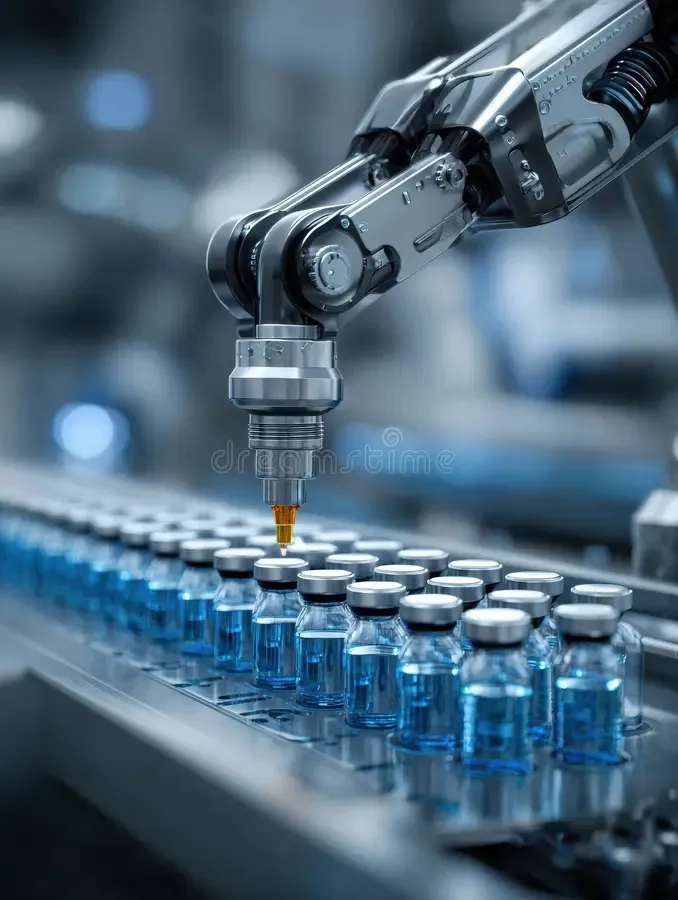
Figure 1: A robotic arm performing high-precision filling of pharmaceutical vials in an ISO-classified cleanroom.
Secondary Packaging: Cartoning, Labeling, and Serialization
After primary packaging, items are collated into cartons or blisters. Robots pick and place products into boxes, insert leaflets, and apply labels with extreme accuracy. A key application is serialization, where robots apply unique identifiers (like 2D data matrix codes) to each saleable unit to comply with track-and-trace regulations (e.g., DSCSA, EU FMD).
Palletizing and End-of-Line Logistics
Heavy-duty robotic palletizers efficiently stack boxes onto pallets according to predefined patterns. They adapt to different product sizes and pallet configurations, reducing physical strain on workers and optimizing warehouse space.
Key Benefits and Advantages
The adoption of robotics delivers tangible and strategic advantages across the pharmaceutical supply chain.
| Benefit Category | Description | Impact |
|---|---|---|
| Quality & Compliance | Eliminates human error in repetitive tasks; ensures consistent application of seals, labels, and codes. Maintains sterile environments by reducing human intervention. | Reduces product recalls, ensures regulatory compliance (FDA, EMA), and enhances patient safety. |
| Operational Efficiency | Operates 24/7 with minimal downtime; achieves higher throughput and faster changeovers between product batches. | Increases Overall Equipment Effectiveness (OEE), reduces time-to-market, and lowers cost per unit. |
| Flexibility & Scalability | Easily reprogrammable for different package sizes, shapes, and formats. Ideal for low-volume, high-mix production (e.g., personalized medicine). | Enables agile manufacturing, supports small-batch production, and future-proofs packaging lines. |
| Workplace Safety | Takes over ergonomically challenging, repetitive, or hazardous tasks (e.g., handling sharp objects, heavy lifting). | Reduces workplace injuries, frees skilled labor for supervisory and technical roles. |
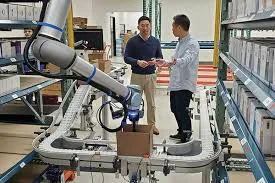
Figure 2: Collaborative robots (cobots) working safely alongside human operators in a secondary packaging area.
Technological Enablers and Integration
The effectiveness of robotics is amplified by synergistic technologies. Machine vision systems act as the "eyes," guiding robots for precise pick-and-place and quality inspection (checking for label defects, missing caps). Force-torque sensors provide the "touch," allowing adaptive handling of delicate items. Integration with Manufacturing Execution Systems (MES) and the Industrial Internet of Things (IIoT) enables real-time monitoring, predictive maintenance, and data-driven optimization of the entire packaging process.
The Rise of Collaborative Robots (Cobots)
A significant trend is the deployment of cobots. Unlike traditional caged robots, cobots are designed to work safely alongside human workers. In pharmaceutical packaging, they assist with tasks like kit assembly, light packaging, and inspection, combining robotic precision with human dexterity and problem-solving skills.
Future Trends and Challenges
The future points towards even greater intelligence and autonomy. Artificial Intelligence (AI) and machine learning will allow robots to self-optimize processes and predict failures. Mobile Autonomous Robots (MARs) will manage material transport within packaging facilities. However, challenges remain, including high initial capital investment, the need for skilled personnel to program and maintain systems, and ensuring cybersecurity in connected environments.
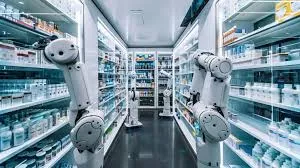
Figure 3: Conceptual view of a fully automated, "lights-out" robotic packaging line for pharmaceuticals.
In conclusion, robotics is not merely an automation tool but a strategic asset in pharmaceutical packaging. It is fundamental to achieving the required levels of quality, efficiency, and agility in a rapidly evolving industry. As technology advances, robotic systems will become more accessible, intelligent, and integral to delivering safe medicines to patients worldwide.