

Material Handling Robot Applications: Revolutionizing Modern Industry
Material handling robots have become a cornerstone of modern industrial automation, transforming how goods are moved, stored, and managed. These robotic systems are designed to automate the repetitive, physically demanding, and often hazardous tasks associated with transporting materials within a facility. From manufacturing assembly lines to expansive e-commerce fulfillment centers, their applications are vast and continually expanding, driven by the need for efficiency, precision, and flexibility.
Core Applications of Material Handling Robots
The deployment of material handling robots spans several critical areas of industrial and commercial operations. Their primary function is to streamline the flow of materials, reducing human labor and minimizing errors.
1. Manufacturing and Production Lines
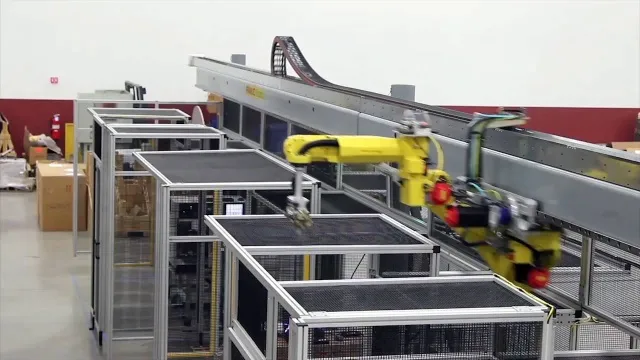
In manufacturing, robots are indispensable for tasks such as machine tending, part transfer, and assembly line feeding. They ensure a consistent and timely supply of components to production stations, which is crucial for maintaining lean manufacturing processes and Just-In-Time (JIT) production systems.
2. Warehousing and Order Fulfillment
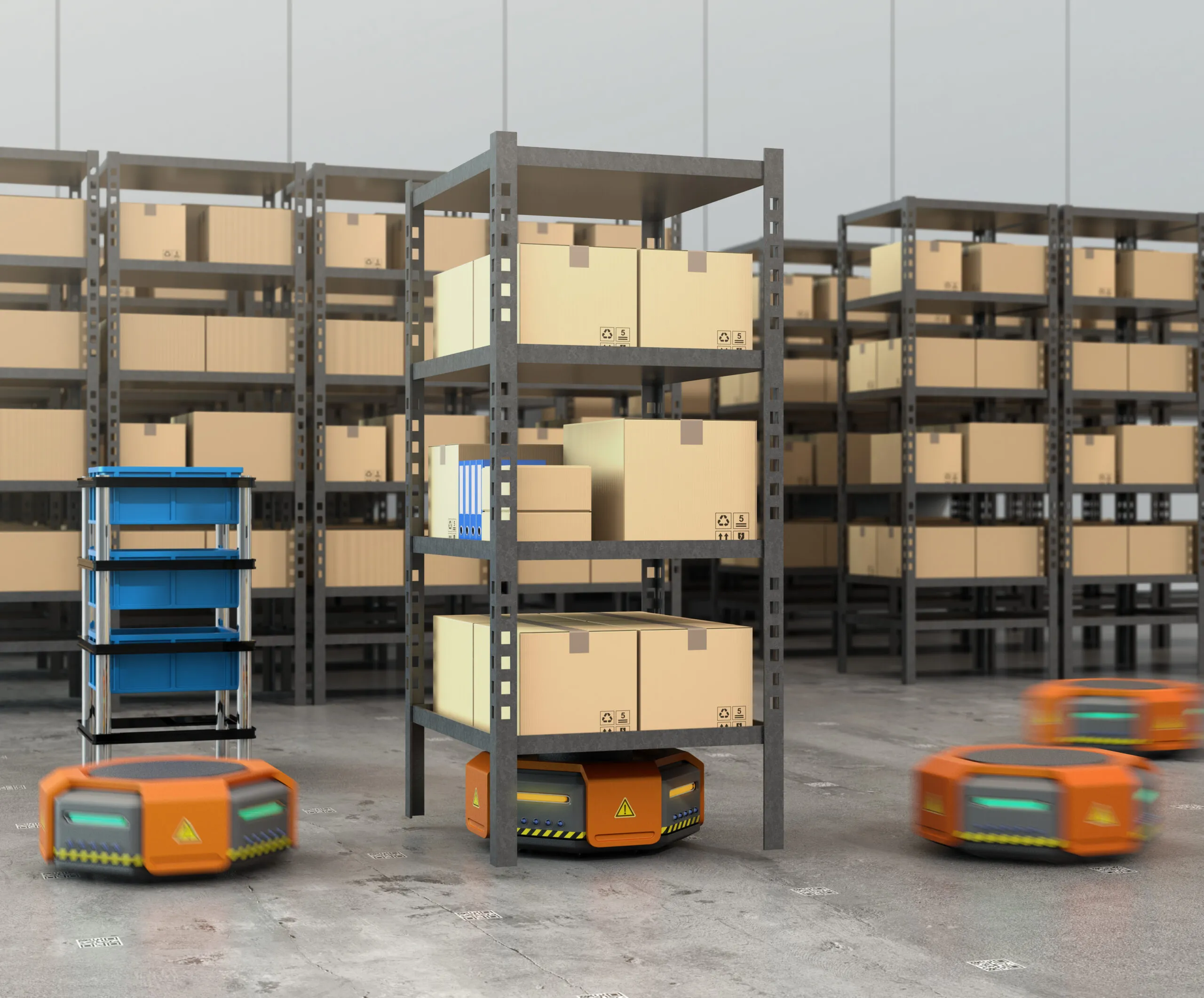
This is one of the fastest-growing applications, particularly with the rise of e-commerce. Autonomous Mobile Robots (AMRs) and Automated Guided Vehicles (AGVs) navigate warehouse floors to transport shelves (goods-to-person systems) or individual items. They work alongside Warehouse Management Systems (WMS) to optimize picking, packing, and sorting operations, dramatically increasing throughput and accuracy.
3. Palletizing and Depalletizing
Robotic palletizers are used to stack bags, boxes, or cases onto pallets in precise, stable patterns. Conversely, depalletizing robots unload incoming pallets. These applications are common in food and beverage, consumer goods, and logistics sectors, where they prevent musculoskeletal injuries associated with manual handling and ensure consistent pallet build quality.
4. Loading and Unloading
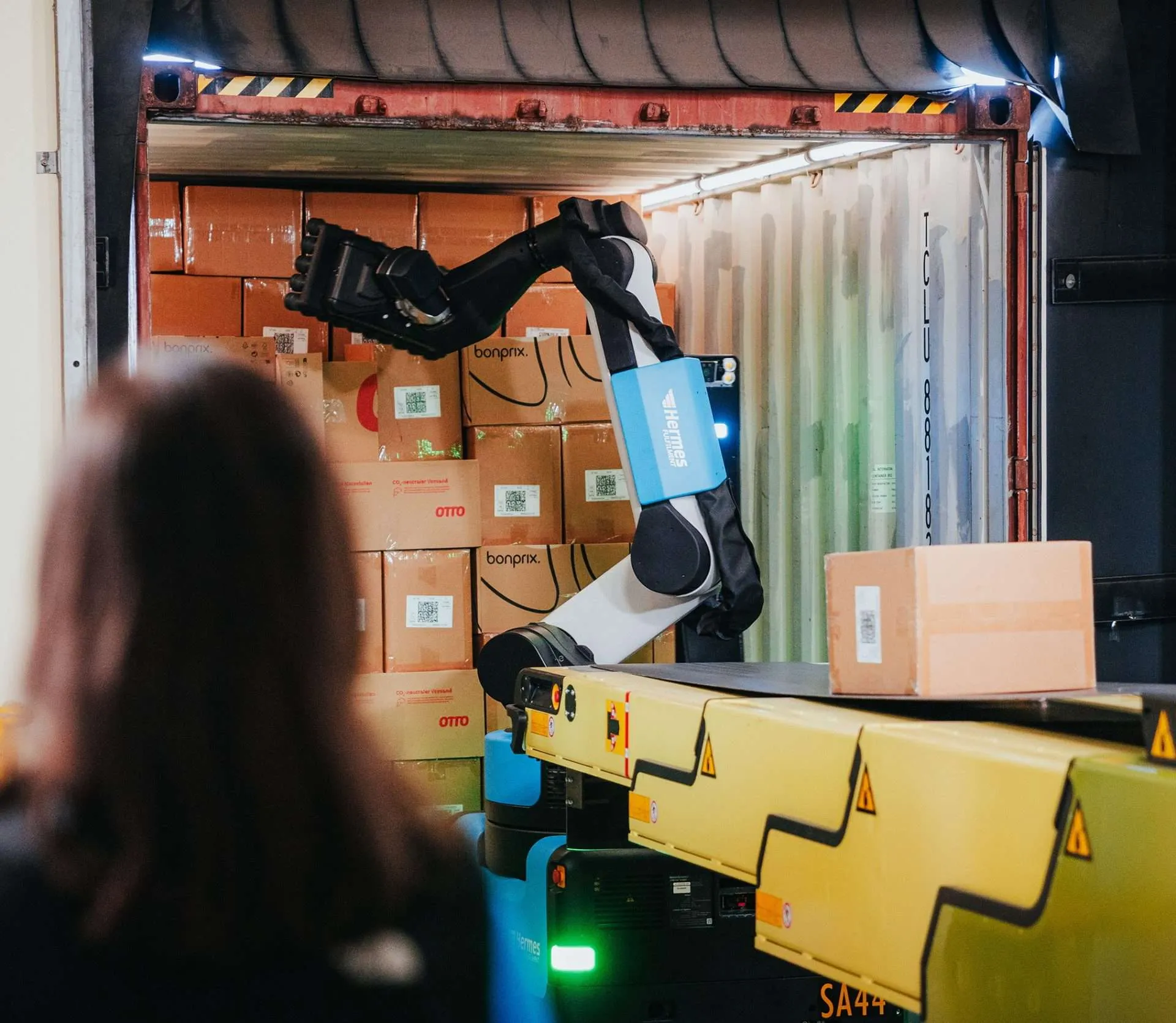
Robots are increasingly used to load raw materials into processing machinery or unload finished products. This includes loading parts into presses, ovens, or injection molding machines, and unloading items from conveyor belts into containers or trucks, facilitating a seamless transition between different stages of the supply chain.
Key Technologies Enabling Material Handling Robots
The effectiveness of these robots is powered by a suite of advanced technologies:
- Advanced Sensors & Vision Systems: 2D/3D cameras, LiDAR, and proximity sensors allow robots to perceive their environment, identify objects, and navigate safely.
- Artificial Intelligence and Machine Learning: AI enables adaptive path planning, predictive maintenance, and the ability to handle a wider variety of items through improved object recognition.
- Collaborative Robot (Cobot) Technology: Cobots are designed to work safely alongside human workers without extensive safety cages, making automation accessible for smaller tasks and flexible workcells.
- Fleet Management Software: This software acts as the "brain" for multiple robots, coordinating their movements, optimizing task allocation, and preventing collisions in real-time.
Benefits and Impact
The adoption of material handling robots delivers significant tangible benefits, as summarized in the table below.
| Benefit Category | Specific Impact |
|---|---|
| Operational Efficiency | 24/7 operation, increased throughput, reduced cycle times, and optimal space utilization. |
| Cost Reduction | Lower labor costs, decreased product damage, and reduced costs from workplace injuries. |
| Accuracy & Quality | Near-zero error rates in picking and placement, consistent palletizing patterns, and improved inventory accuracy. |
| Safety & Ergonomics | Removes workers from dull, dirty, and dangerous tasks, eliminating heavy lifting and repetitive strain injuries. |
| Scalability & Flexibility | Robot fleets can be scaled up or down based on demand, and quickly reprogrammed for new tasks or layouts. |
Future Trends and Challenges
The future of material handling robotics is oriented towards greater intelligence and integration. Key trends include the rise of hyper-flexible AMRs that can adapt to dynamic environments without predefined paths, and the integration of robotics with the Internet of Things (IoT) for real-time data exchange across the entire supply chain. Furthermore, advanced gripper technology (including soft robotics) will allow a single robot to handle a much wider array of item shapes and sizes, from rigid boxes to delicate, irregular objects.
Challenges remain, such as the high initial capital investment, the need for integration with legacy systems, and the ongoing requirement for skilled personnel to program, maintain, and oversee robotic operations. However, as technology advances and becomes more accessible, these barriers are steadily lowering.
Conclusion
Material handling robots are no longer a futuristic concept but a present-day necessity for competitive industrial and logistics operations. Their applications in manufacturing, warehousing, and logistics are driving unprecedented levels of efficiency, safety, and flexibility. As technologies like AI, machine vision, and collaborative robotics continue to evolve, these robotic systems will become even more adaptive, intelligent, and integral to the global supply chain, shaping the future of how materials move around the world.