

Best Automotive Assembly Robots: Revolutionizing Manufacturing
The automotive industry stands as the pioneering and largest adopter of industrial robotics. Assembly lines, the heart of vehicle manufacturing, rely on robots for unmatched precision, speed, and consistency. This article explores the leading robotic systems that define best-in-class automotive assembly, examining their key features, applications, and the technological trends shaping the future of car manufacturing.
Why Robotics are Indispensable in Automotive Assembly
Modern vehicles comprise thousands of parts requiring precise fitting. Human labor, while adaptable, cannot match the repeatability, strength, and endurance of robots for tasks like welding, painting, and heavy component handling. Robots enhance quality control, improve worker safety by handling hazardous tasks, and provide the flexibility needed for mass customization. The return on investment is realized through higher throughput, reduced waste, and consistent product quality.
Top Contenders in Automotive Assembly Robotics
Several manufacturers dominate the automotive shop floor. Their robots are engineered for rigorous, high-cycle tasks.
1. Fanuc Robotics
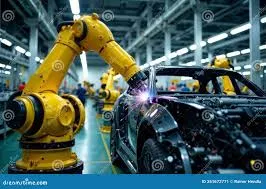
A global leader, Fanuc is renowned for reliability and minimal downtime. Their robots excel in heavy-duty assembly.
Flagship Model: The FANUC R-2000iC series. This robust, high-payload robot is a staple for body framing and powertrain assembly.
Key Application: Spot welding. Fanuc's robots provide consistent, high-quality welds across vehicle bodies with incredible speed.
2. ABB Robotics
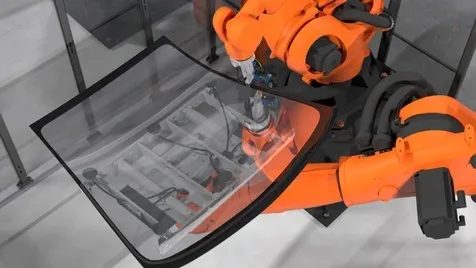
ABB offers a strong focus on precision and integrated digital solutions. Their robots are pivotal in delicate assembly operations.
Flagship Model: The IRB 6700 series. Known for its energy efficiency and path accuracy, ideal for material handling and assembly.
Key Application: Adhesive sealing and dispensing. ABB robots apply windshields, sunroofs, and noise-dampening materials with perfect bead consistency.
3. KUKA Robotics
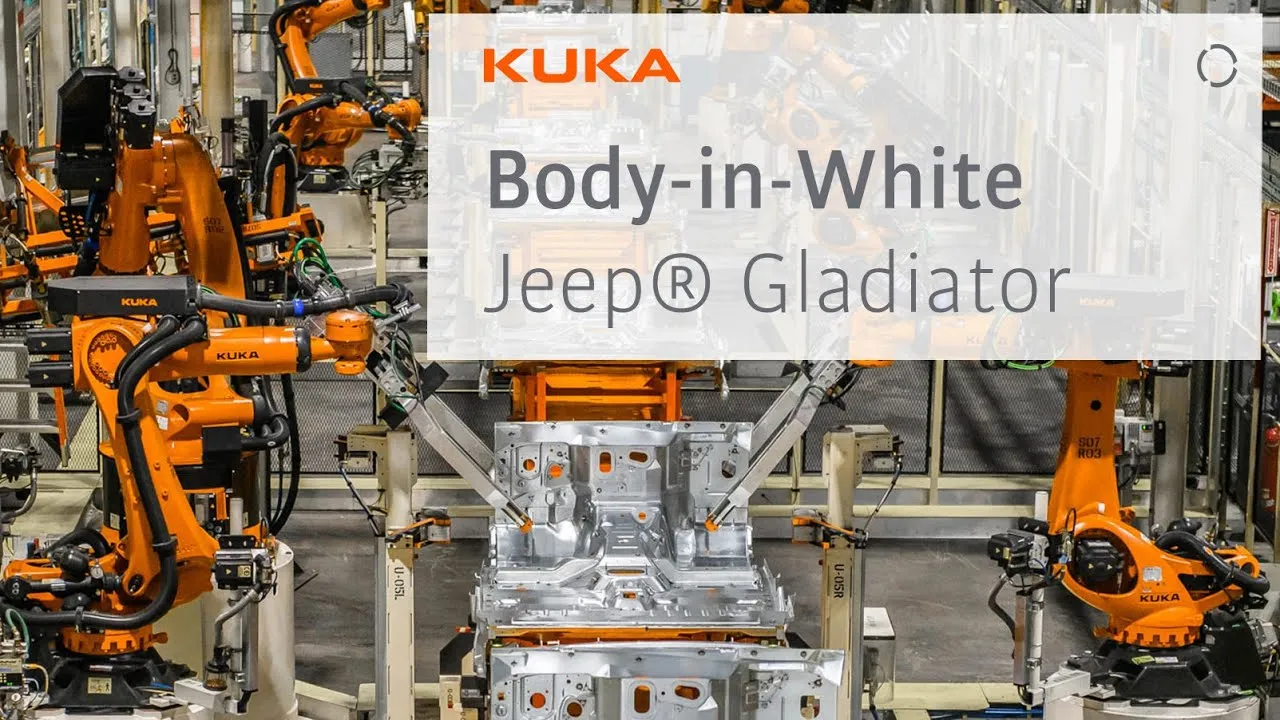
Synonymous with automotive innovation, KUKA provides highly flexible and agile robots, often seen in advanced body-in-white processes.
Flagship Model: The KR QUANTEC series. Offers a great range of variants for handling, welding, and palletizing.
Key Application: Body-in-white framing. KUKA's systems precisely position and clamp large body panels for welding, ensuring structural integrity.
4. Yaskawa Motoman
Yaskawa combines high performance with cost-effectiveness, providing reliable solutions for various assembly stages.
Flagship Model: The GP series robots. Designed for high-speed, precision assembly of smaller components.
Key Application: Powertrain and engine assembly. Motoman robots install pistons, bearings, and gears with sub-millimeter accuracy.
Comparison of Key Robotic Systems
The following table summarizes the core attributes of the leading automotive assembly robots:
| Manufacturer | Flagship Series | Primary Strength | Typical Payload | Key Assembly Application |
|---|---|---|---|---|
| Fanuc | R-2000iC | Reliability & Heavy Duty | Up to 210kg | Spot Welding, Framing |
| ABB | IRB 6700 | Precision & Digital Integration | 150kg - 300kg | Dispensing, Material Handling |
| KUKA | KR QUANTEC | Flexibility & Agility | 90kg - 300kg | Body-in-White, Handling |
| Yaskawa | GP Series | High-Speed Precision | 7kg - 80kg | Powertrain, Component Assembly |
Critical Applications in the Assembly Process
These robots perform a symphony of coordinated tasks:
Body Shop: The Foundation
Robots dominate here with spot welding (joining metal panels), laser welding (for high-strength seams), and hemming (folding panel edges).
Paint Shop: Perfection and Consistency
Robots provide uniform primer, base coat, and clear coat application, ensuring a flawless finish while operating in hazardous environments.
General Assembly: Final Integration
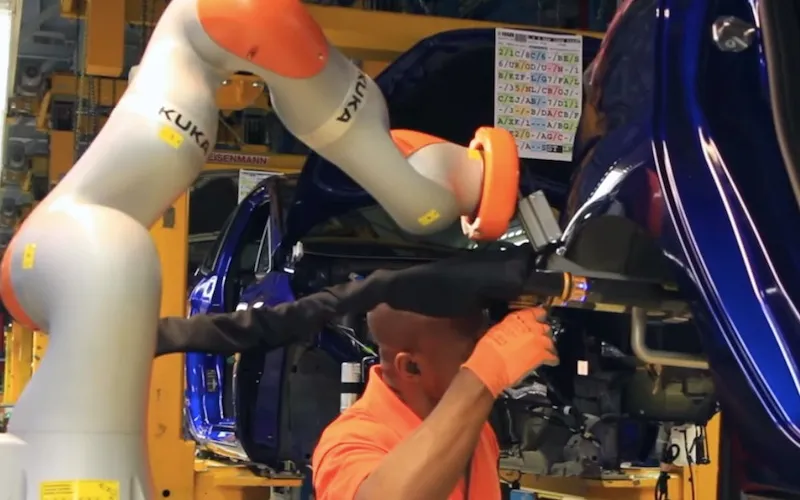
This includes windshield and window installation, door fitting, seat placement, and dashboard assembly. Collaborative robots (cobots) are increasingly used here to work alongside humans.
The Future: Trends Shaping Next-Generation Assembly
Automation is evolving rapidly. Key trends include:
- Collaborative Robots (Cobots): Working safely alongside humans for final assembly and quality checks.
- Artificial Intelligence & Vision Systems: Enabling robots to adapt to part variations and perform real-time quality inspection.
- Mobile Robotics (AGVs/AMRs): Creating flexible assembly lines where the car chassis moves between stationary robot stations.
- Digital Twins: Simulating and optimizing entire robotic assembly processes in a virtual environment before physical implementation.
Conclusion
The "best" automotive assembly robot depends on the specific task—be it the brute strength of a Fanuc welder, the delicate precision of an ABB dispenser, or the flexible agility of a KUKA handler. Together, these robotic systems form the automated backbone of the automotive industry, driving it toward greater efficiency, quality, and adaptability. As technology advances with AI and collaboration, their role will only become more sophisticated and integral to building the vehicles of tomorrow.