

The automotive manufacturing industry stands at the forefront of the fourth industrial revolution, driven by the integration of Artificial Intelligence (AI) into robotic assembly systems. These advanced robots are no longer mere programmable machines executing repetitive tasks; they have evolved into intelligent, adaptive, and collaborative partners on the factory floor. This transformation is enhancing precision, flexibility, safety, and overall efficiency, setting new benchmarks for productivity and quality in vehicle production.
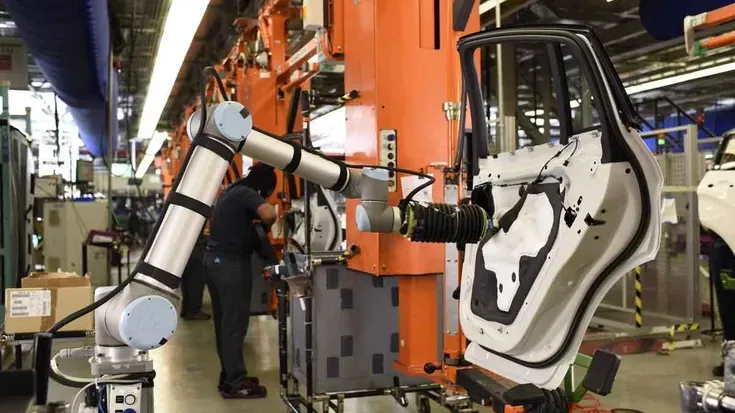
Figure 1: AI-powered collaborative robots (cobots) working in unison with human operators on a final assembly line.
Core Technological Advancements
The leap in capability stems from several converging AI technologies. Machine Learning (ML) algorithms, particularly deep learning, enable robots to learn from vast datasets of assembly processes, visual inspections, and sensor feedback. This allows for continuous improvement in task execution without explicit reprogramming.
Computer Vision and Adaptive Manipulation
Advanced 2D and 3D vision systems, powered by convolutional neural networks (CNNs), give robots exceptional perceptual abilities. They can identify parts, detect microscopic defects, and guide precise placement in real-time, even if components vary slightly in position or orientation.
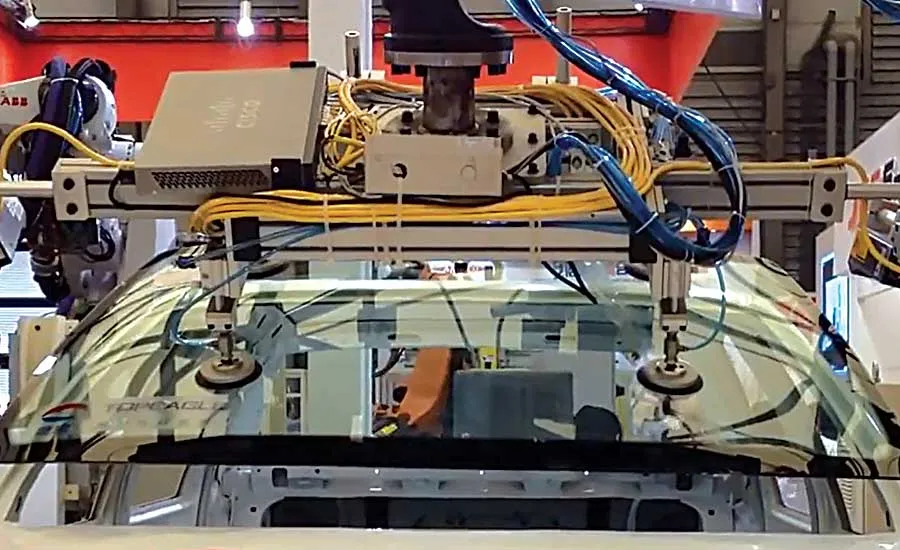
Figure 2: A robotic arm utilizing AI-driven computer vision for precise windshield installation.
Predictive Maintenance and Process Optimization
AI models analyze data from vibration, thermal, and acoustic sensors on robots to predict component failures before they occur, minimizing unplanned downtime. Furthermore, AI algorithms optimize entire assembly sequences, balancing workloads across multiple robots to maximize throughput.
Key Applications in Automotive Assembly
The application of AI-powered robots spans the entire assembly process, from body shop to final trim.
| Assembly Stage | AI Robot Application | Key Benefit |
|---|---|---|
| Body-in-White (Welding) | Adaptive welding robots that adjust parameters based on seam tracking and gap detection. | Superior weld quality and consistency, reduced material waste. |
| Paint Shop | Vision-guided robots for consistent paint application and defect inspection. | Flawless finish, optimized paint usage, 100% quality inspection. |
| Powertrain Assembly | High-precision robots for engine and transmission assembly, with AI-guided torque control. | Nanometer-level precision, ensures long-term reliability of critical components. |
| Final Assembly (Trim) | Collaborative robots (Cobots) assisting with dashboard installation, door fitting, and wheel mounting. | Enhanced flexibility for mixed-model production, improved worker safety. |
Impact on Manufacturing Metrics
The adoption of AI-powered assembly robots delivers measurable improvements across critical performance indicators.
Quality and Precision
Defect rates plummet as AI vision systems perform real-time inspection at every step, catching errors human eyes might miss. Precision in tasks like adhesive dispensing or screw driving reaches unprecedented levels.
Flexibility and Agility
Traditional robots required costly and time-consuming reprogramming for new models. AI-enabled robots can be quickly reconfigured via software and can learn new tasks through simulation and demonstration, supporting the trend towards mass customization.
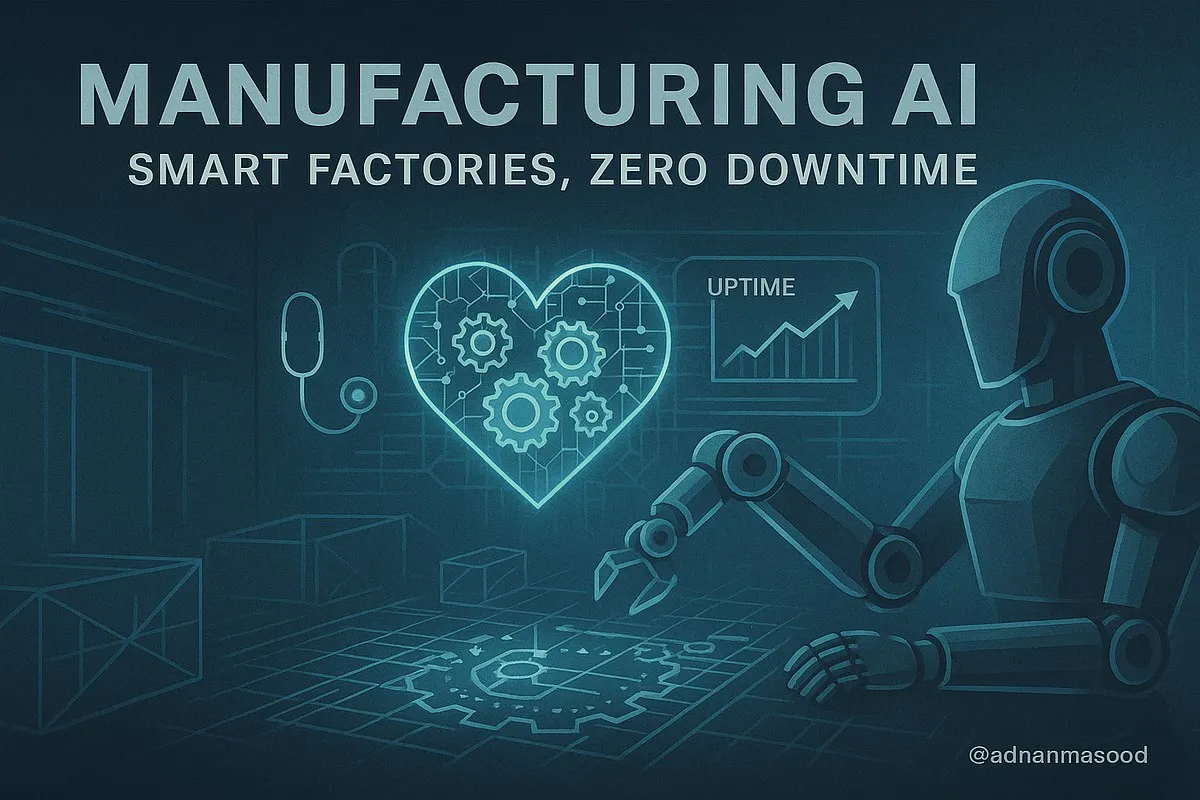
Figure 3: Representative performance improvements driven by AI integration in automotive robotics.
Human-Robot Collaboration (Cobotics)
AI is the cornerstone of safe cobotics. Robots equipped with force-sensing and real-time path planning can work safely alongside humans, taking over ergonomically challenging or hazardous tasks, thus augmenting human capabilities rather than replacing them.
Future Trends and Challenges
The future points towards fully autonomous, lights-out assembly cells where robots manage the complete process. Swarm robotics, where multiple AI agents coordinate seamlessly, and digital twin technology, creating a virtual replica of the assembly line for simulation and optimization, are emerging frontiers. However, challenges remain, including high initial investment, the need for robust data infrastructure, cybersecurity concerns, and a significant skills gap in the workforce to develop and maintain these complex systems.
Conclusion
AI-powered automotive assembly robots represent a paradigm shift in manufacturing. By merging physical dexterity with cognitive intelligence, they are creating smarter, more resilient, and more efficient production ecosystems. As AI technology continues to mature, its deep integration with robotics will undoubtedly accelerate, driving the automotive industry towards a more innovative and sustainable future. The race is no longer about automation alone, but about intelligent automation that learns, adapts, and evolves.